Stress is far more than an emotional state. It is an intricate, full-body physiological cascade that alters your heart rate, shifts blood sugar regulation, disrupts sleep architecture, and changes how individual cells manage energy. At the command center of this emergency mechanism sit the adrenal glands. These two pyramid-shaped endocrine organs, resting just above your kidneys, orchestrate the release of cortisol and adrenaline whenever your central nervous system detects a threat. Evolutionarily, this survival machinery was optimized to save your life during brief, acute crises—like escaping a physical predator. The fundamental friction of contemporary life is that traffic jams, professional deadlines, relentless digital notifications, and financial worry keep this physiological alarm system ringing continuously for months or years. Over time, chronic hyperarousal burns through specific biochemical tools, leaving you fatigued, cognitively foggy, and physically wired yet completely exhausted.
Here lies the critical factor that conventional wellness advice often overlooks: your neurological and hormonal stress response runs entirely on micronutrients. Vitamins and minerals serve as the non-negotiable chemical cofactors required to synthesize cortisol, buffer the nervous system, protect delicate cellular tissue from oxidative destruction, and replenish depleted metabolic reserves. When these nutritional inventories run critically low, your body’s ability to cope with pressure degrades, leading to prolonged recovery cycles. This guide breaks down the specific micronutrients essential for stress reduction and adrenal health, their precise biochemical mechanisms, reliable whole-food sources, and actionable strategies to build a resilient daily routine.
What Your Adrenal Glands Actually Do Under Pressure
Your adrenal cortex and medulla synthesize a sophisticated suite of hormones that govern daily vitality and homeostasis. Cortisol mobilizes stored glucose to supply immediate fuel during high-demand windows. Aldosterone regulates sodium and potassium ratios, directly managing vascular tone, blood pressure, and fluid balance. Catecholamines—namely adrenaline and noradrenaline—provide instant bursts of speed, mental clarity, and physical power. Furthermore, the adrenals produce DHEA (dehydroepiandrosterone), a crucial precursor hormone that helps balance out the more aggressive effects of cortisol. Every single enzymatic pathway responsible for manufacturing these chemical messengers requires specific vitamins and minerals to function without error.
Consider vitamin C, for instance. Gram for gram, adrenal tissue maintains a higher concentration of ascorbic acid than almost any other organ in the human body—surpassing even the brain and the liver. This profound concentration is not accidental. Vitamin C acts as an essential enzymatic cofactor in converting cholesterol into cortisol, while simultaneously neutralizing the intense oxidative stress generated by ongoing hormonal output. When psychological or physical demands spike, your adrenals rapidly deplete their vitamin C stores to sustain hormone production.
Deconstructing the Adrenal Fatigue Debate
The term “adrenal fatigue” remains immensely popular in wellness culture, yet mainstream endocrinology rejects it as an imprecise clinical diagnosis. Medical professionals rightly emphasize that true primary adrenal insufficiency, such as Addison’s disease, is a life-threatening endocrine disorder requiring clinical intervention and hormone replacement. However, the lived reality behind the colloquial label—severe burnout, unrefreshing sleep, profound lethargy, salt cravings, and cognitive inertia driven by prolonged modern stress—is entirely valid.
Whether you characterize this state as chronic fatigue, burnout, or HPA-axis dysregulation (Hypothalamic-Pituitary-Adrenal axis), the practical remediation strategy remains identical: reduce the exogenous stress load, nourish the physiology, and restore fundamental lifestyle habits. Micronutrient repletion provides an exceptionally effective foundation because targeted nutritional adjustments are measurable, economically accessible, and safe.
Vitamin C: The Adrenal Workhorse
Ascorbic acid supports adrenal function through two primary mechanisms. First, it acts as a mandatory electron donor and cofactor for dopamine beta-hydroxylase and other enzymes that facilitate steroidogenesis—the creation of cortisol from cholesterol. Without adequate tissue saturation, hormone synthesis becomes sluggish and inefficient. Second, vitamin C functions as a potent water-soluble antioxidant, scavenging the reactive oxygen species (ROS) produced en masse during heavy metabolic stress, thereby shielding the adrenal cortex from structural cellular damage.
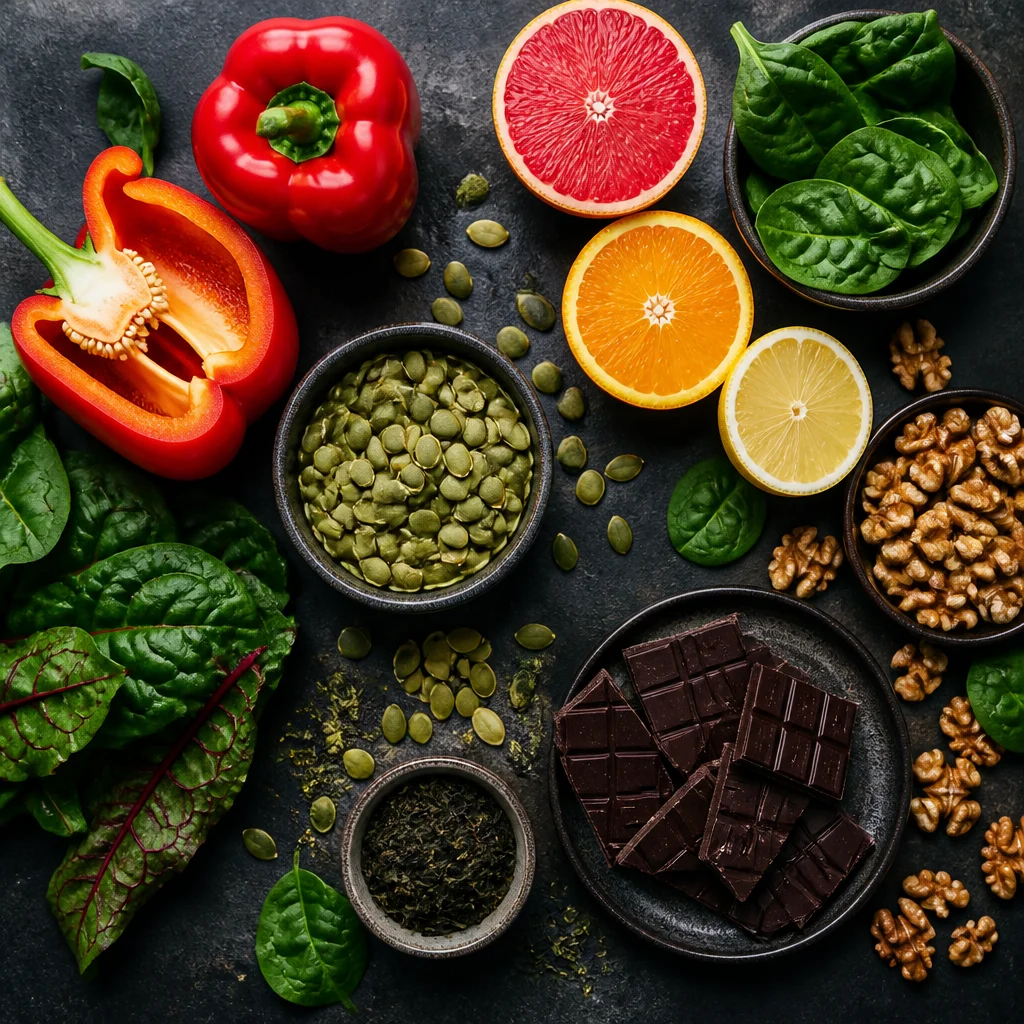
To maintain optimal status, incorporate vitamin C-dense foods into every single meal. Exceptional sources include red and yellow bell peppers, citrus fruits, kiwi, raw broccoli florets, strawberries, and Brussels sprouts. Because heat degrades vitamin C, ensure you include raw options daily. A sustainable dietary target ranges from 200 to 500 milligrams per day, sourced primarily through whole foods rather than high-dose isolated supplements, which can sometimes cause gastrointestinal distress.
B Vitamins: Fuel for a Overclocked Nervous System
The B-complex family functions as the master spark plugs of cellular energy production and neurological regulation. Vitamin B5 (pantothenic acid) is chemically indispensable because it forms the core of coenzyme A (CoA), the foundational molecule required to initiate steroid hormone synthesis in the adrenals. Vitamin B6 (pyridoxine) acts as a crucial cofactor for the decarboxylation reactions that convert dietary amino acids into stabilizing neurotransmitters, including serotonin, GABA, and dopamine.
Meanwhile, folate (B9) and cobalamin (B12) regulate systemic homocysteine levels and maintain the structural integrity of the myelin sheath that insulates nerve fibers. Thiamine (B1) and riboflavin (B2) directly support mitochondrial ATP generation within high-demand tissues like the brain and muscle. Because B vitamins are water-soluble and cannot be stored in large quantities, daily dietary replenishment is mandatory. Excellent food sources include pastured eggs, wild-caught fish, organ meats, poultry, legumes, dark leafy greens, and nutritional yeast. Individuals following strictly plant-based diets must monitor B12 status carefully, as it occurs naturally only in animal-derived matrices.
Magnesium: The Master Relaxer Mineral
Magnesium participates in over 300 distinct enzymatic reactions across the human body, acting as a crucial brake on the over-stimulated stress axis. It modulates NMDA receptors in the brain, helps prevent excessive calcium influx into neurons, dampens sympathetic nervous system output, and facilitates skeletal muscle relaxation. Subclinical magnesium deficiency is extraordinarily common today, driven by the consumption of refined grains, agricultural soil depletion, and high caffeine intake. Classic signs of insufficiency include nocturnal muscle cramps, eyelid twitches, sleep onset insomnia, tension headaches, and an underlying sense of nervous irritability.
Nutritional abundance is found in raw pumpkin seeds, almonds, dark chocolate (70% cacao or higher), spinach, black beans, and quinoa. Soaking and sprouting legumes significantly enhances mineral bioavailability by reducing phytic acid. While oral magnesium glycinate or malate can support evening relaxation and sleep architecture, food should always form the baseline of your strategy.
Zinc and Selenium: Quiet Cellular Defenders
Zinc is a versatile mineral that underpins immune competency, intercellular signaling, and the stabilization of antioxidant proteins like metallothionein. It also plays a vital role in converting thyroid hormones (T4 to the active T3), which dictate basal metabolic rate and perceived energy levels. Oysters, grass-fed beef, pumpkin seeds, hemp hearts, and pastured eggs provide robust amounts of bioavailable zinc.
Selenium serves as an irreplaceable building block for glutathione peroxidase and thioredoxin reductase—two of the body’s most powerful intrinsic antioxidant enzyme systems. These enzymes protect both the thyroid and adrenal glands from the oxidative fallout of chronic stress. Just one or two Brazil nuts per day can completely satisfy your daily selenium requirement due to their remarkable soil concentration. Wild-caught seafood and sunflower seeds also contribute meaningful amounts.
Vitamin D: Mood, Immunity, and Stress Tolerance
Functioning more as a neurosteroid hormone than a simple vitamin, vitamin D binds to nuclear receptors distributed widely throughout the central nervous system, including regions governing mood, emotional regulation, and resilience. Suboptimal serum levels are consistently correlated with fatigue, seasonal affective dips, and reduced stress tolerance. Modern indoor lifestyles and high latitude living make winter deficiencies widespread.
While ultraviolet-B exposure on bare skin remains the ideal physiological trigger for synthesis, dietary inclusions like wild salmon, sardines, pasture-raised egg yolks, and vitamin D-fortified foods offer supplemental support. Given that both severe deficiency and excessive toxicity create clinical issues, lab testing 25-hydroxyvitamin D levels before initiating high-dose supplementation is standard best practice.
Electrolytes: Sodium, Potassium, and Calcium Balance
During acute or chronic stress, the endocrine system alters mineral handling to maintain vascular volume and blood pressure. This fluid shift explains why exhausted individuals frequently experience intense salt cravings. Aggressive, blanket sodium restriction can backfire under high-stress conditions, triggering lightheadedness and autonomic dysregulation, particularly in those who maintain high water intake or exercise frequently. Potassium, abundantly present in baked potatoes, white beans, avocados, and Swiss chard, works in tandem with sodium to maintain cellular membrane potentials and healthy blood pressure.
Calcium extends far beyond skeletal structure; ionized calcium is required for neurotransmitter exocytosis and muscle fiber contraction. Fermented dairy, calcium-set tofu, collard greens, and sardines consumed with bones cover structural and neurological requirements efficiently.
Iron and Cellular Energy Production
Iron is the central atom in hemoglobin and myoglobin, responsible for transporting oxygen from your lungs to every metabolically active cell in your body. When iron stores (ferritin) drop, cellular respiration becomes sluggish. You feel winded, fatigued, and mentally sluggish, compounding the physical impact of psychological stress. Heme iron from animal sources like beef, lamb, and sardines exhibits high absorption rates. Non-heme iron from lentils and spinach requires pairing with vitamin C to optimize uptake.
Stress creates a destructive physiological feedback loop. The neuroendocrine stress response accelerates the metabolic clearance of magnesium, vitamin C, and B-complex vitamins. Simultaneously, elevated cortisol drives up blood glucose levels, which further increases the body’s demand for magnesium and B vitamins to process the excess circulating sugar. Under pressure, appetite often shifts toward hyper-palatable, nutrient-poor, sugary convenience foods that offer quick calories but zero micronutrients. Concurrently, cortisol compromises gastrointestinal barrier function and reduces digestive enzyme output, impairing nutrient absorption. Over time, the metabolic withdrawal rate far outpaces dietary deposits.
Breaking this cycle requires consistent access to diverse, minimally processed whole foods, paired with sleep hygiene and restorative movement that signal safety to the autonomic nervous system.
Food First: Designing an Adrenal-Supportive Plate
You do not need an expensive, overly complex protocol to nourish your endocrine system. Structure your meals around a straightforward template:
- Protein Foundation: Start with quality proteins such as pastured eggs, wild fish, poultry, organic tempeh, or Greek yogurt to stabilize blood sugar.
- Antioxidant Vegetables: Add a colorful variety of fiber-rich vegetables or low-glycemic fruits to supply vitamin C and polyphenols.
- Complex Carbohydrates: Include starchy tubers, root vegetables, or whole grains to provide steady, sustained glucose for brain function.
- Healthy Fats: Finish with unrefined fats from avocados, extra virgin olive oil, walnuts, or chia seeds to facilitate the absorption of fat-soluble vitamins (A, D, E, K).
Eat at regular, predictable intervals. Prolonged fasting windows or erratic meal timing can trigger counter-regulatory cortisol spikes, leaving you vulnerable to afternoon crashes and sugar cravings. Consume a protein-forward breakfast within an hour of waking to set a calm glycemic tone for the day. Keep hydration balanced with adequate mineral intake.
Habits That Multiply Nutritional Impact
Micronutrients cannot perform effectively in isolation; they require foundational lifestyle cues to direct their activity:
- Prioritize Sleep: Defend seven to nine hours of dark, uninterrupted sleep to allow glymphatic clearance and neurological repair.
- Morning Sunlight: Step outside within an hour of waking to anchor your circadian rhythm and optimize natural cortisol curves.
- Balanced Movement: Combine low-intensity walking with moderate strength training, avoiding chronic, excessive high-intensity exercise that depletes adrenal reserves.
- Caffeine Boundaries: Restrict coffee consumption to the morning hours and eliminate caffeine entirely after lunch to protect deep sleep architecture.
- Autonomic Resets: Practice slow, diaphragmatic breathing (prolonged exhales) when tension arises to signal physical safety directly to the vagus nerve.
Monitor your body for systemic patterns rather than isolated complaints. Persistent fatigue that sleep fails to resolve, stubborn salt cravings, frequent muscular tension, recurring infections, and delayed exercise recovery all point toward underlying nutritional gaps. Comprehensive blood panels can assess vitamin D, serum B12, ferritin, and red blood cell magnesium. Always consult a qualified medical professional before introducing high-dose supplements, particularly if you manage chronic health conditions or take prescription medications. Targeted supplements can bridge gaps, but they can never substitute for real food, restorative rest, and effective stress mitigation.