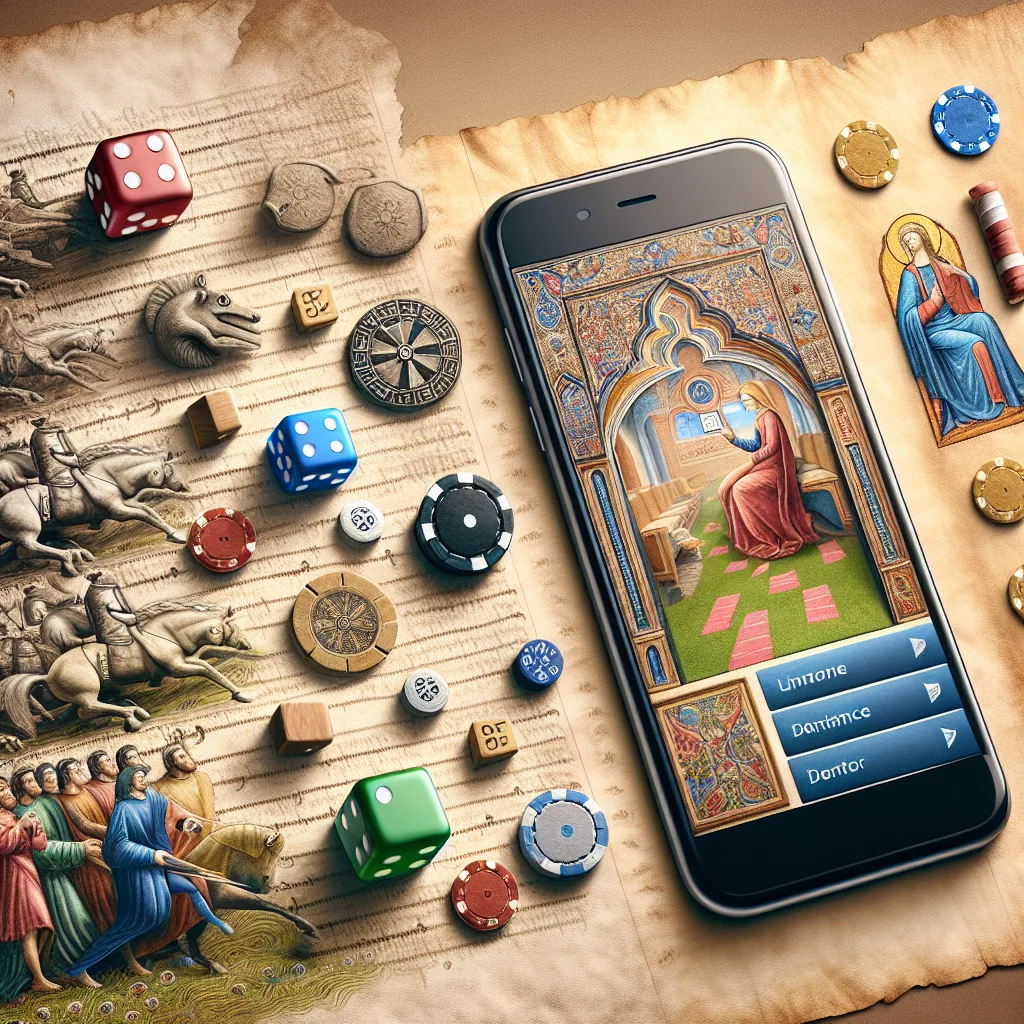
A Wager Through the Ages: Gambling as a Human Constant
The urge to cast lots, to test fate, and to stake something of value on an uncertain outcome is a thread woven deeply into the fabric of human history. Gambling is not a modern invention or a simple vice; it is a complex social, cultural, and economic phenomenon that has existed in virtually every known society, from the most ancient civilizations to the digital global village. Its forms have evolved from animal knucklebones to virtual reality casinos, but its core psychological appeal—the negotiation with chance, the thrill of risk, the dream of transformation—has remained remarkably consistent. Examining the history of gambling is not merely cataloging games; it is exploring how humans have understood luck, fortune, morality, and social order across millennia. It reveals our eternal fascination with uncertainty and our attempts to impose meaning, ritual, and sometimes control, onto the random whims of the universe.
Divination and Destiny: Gambling’s Sacred Origins
In many ancient cultures, the line between gambling and divination was blurred or nonexistent. The earliest forms of “gambling” were often sacred rituals intended to discern the will of the gods or to make impartial decisions. The casting of lots—using marked sticks, animal bones (astragali), or stones—was a common method for distributing land, selecting leaders, or determining guilt or innocence in legal matters. In ancient Mesopotamia and Egypt, such practices were seen as a way to access divine judgment. The famous “Cleromancy” involved throwing lots to receive answers from the gods. This sacred context imbued games of chance with a profound significance; winning was not mere luck but a sign of favor, destiny, or truth. This connection to fate and fortune laid a foundational psychological layer, framing chance not as meaningless randomness, but as a channel to a higher order—a belief that subtly persists in the modern gambler’s feeling of being “chosen” by luck.
The Games of Empires: Rome, China, and the Rise of Regulation
As societies grew more complex, so did their games. In ancient Rome, gambling was immensely popular across all social classes. Soldiers played “Tesserae” (dice games) in their camps, while elites indulged in “Aleae” (a board game involving dice). The Roman passion was so great that despite periodic legal bans (like the Lex Alearia), which were largely unenforceable, gambling dens thrived. Simultaneously, in Han Dynasty China, games involving tiles were evolving, which would centuries later give rise to Mahjong and modern dominoes. The first state-sponsored lottery is widely credited to the Chinese Han Dynasty, used to fund major state projects like the Great Wall. This period established a recurring historical theme: the tension between popular demand for gambling and official attempts to control or profit from it. Authorities have cyclically banned gambling as a social ill, only to later legalize and tax it as a lucrative revenue stream, a cycle that continues to this day.
The Middle Ages to the Renaissance: Cards, Casinos, and the Codification of Chance
<2>The late Middle Ages saw the introduction of playing cards from the Islamic world into Europe via trade routes. These cards, with their suits and face cards, provided a new and versatile medium for games of skill and chance. During the Renaissance, the mathematical study of probability began with correspondence between Blaise Pascal and Pierre de Fermat over dice game problems, laying the groundwork for modern statistics. This was the great intellectual pivot: chance was beginning to be understood as something quantifiable, not just mystical. The first dedicated gambling houses, precursors to casinos, appeared in 17th-century Italy. The Ridotto in Venice, established in 1638, was a government-sanctioned venue open during carnival season to control and tax gambling. It marked the institutionalization of gambling into a commercial leisure activity, moving it from the street and the private home into a managed, public space designed for the purpose.
The Frontier and the American Dream: Gambling in the New World
Gambling was integral to the settlement and culture of the United States. Early English colonies used lotteries to finance public works. On the frontier, card games and dice were staple pastimes in saloons and on riverboats, symbolizing the risk-taking spirit of expansion and the fluidity of fortune in a new land. The 19th-century Gold Rush cemented this association, with mining towns springing up around gambling halls. However, a wave of moral reform in the late 1800s and early 1900s, driven by religious movements, led to widespread prohibition of gambling. This prohibition created a vacuum filled by organized crime, which ran illegal numbers games and off-track betting. The modern era of American gambling began in 1931, when Nevada legalized casino gambling to generate revenue during the Great Depression, followed by New Jersey in 1976 with Atlantic City. This tied the industry explicitly to economic revival, framing it not as vice, but as a tool for civic development.
The Digital Revolution: From Las Vegas to Your Living Room
The late 20th and early 21st centuries have witnessed the most radical transformation in gambling’s history: digitization. The first video slot machine appeared in the 1970s, but the internet changed everything. The mid-1990s saw the launch of the first online casinos and sportsbooks, breaking the physical tether to a specific location. This created unprecedented access, anonymity, and convenience. The rise of smartphones then put a global casino in everyone’s pocket. This era has democratized gambling but also amplified its risks, enabling 24/7 access and introducing new forms like skin betting in video games and cryptocurrency casinos. The algorithms and personalized marketing of online platforms represent a new frontier of psychological engagement, using data analytics to optimize the “player experience” in ways that physical casinos could only dream of. The digital age has completed gambling’s journey from a communal, ritualistic activity to a highly individualized, on-demand service.
Cultural Reflections: Gambling in Literature, Film, and Myth
The story of gambling is also told in our art and stories, reflecting our deep ambivalence towards it. In mythology, gods gambled for the fate of the world. In literature, from Dostoevsky’s “The Gambler” to the poker scenes in Twain’s works, gambling serves as a powerful metaphor for life’s risks, moral decay, or the pursuit of the elusive American Dream. Film has romanticized the high-stakes poker player (“Rounders”), glamorized the casino heist (“Ocean’s Eleven”), and tragicized addiction (“The Gambler”). These narratives shape public perception, oscillating between the image of the clever, cool-risk-taker and the pathetic, doomed addict. This cultural duality mirrors the societal schism: gambling as exciting entertainment versus dangerous pathology. The stories we tell reinforce the idea that gambling is not just a game, but a dramatic arena where character, fate, and fortune are tested and revealed.
Lessons from the Long Game: What History Teaches Us
The historical journey of gambling offers crucial insights for the present. First, it demonstrates that the desire to gamble is a persistent human trait, resistant to eradication by law or moral decree. Effective policy must therefore focus on management, harm reduction, and consumer protection rather than unrealistic prohibition. Second, it shows that gambling has always been intertwined with power and economics, used by states to raise revenue and by individuals to seek rapid social mobility. Third, the evolution from ritual to recreation to digital service highlights how technology amplifies both access and potential harm. Finally, history teaches us that the context matters profoundly. A dice game in a sacred temple, a hand of poker on a riverboat, and a spin on a smartphone slot are technologically different activities, but they channel the same fundamental human impulses towards chance, hope, and destiny. Understanding this long history allows for a more nuanced, less judgmental view of the present, recognizing gambling as a multifaceted mirror of who we are and what we hope for, for better and for worse.